
Service 03 of 06
New AC and furnace systems
A new system is a big purchase. It should be sized for your house and quoted only when it makes sense.
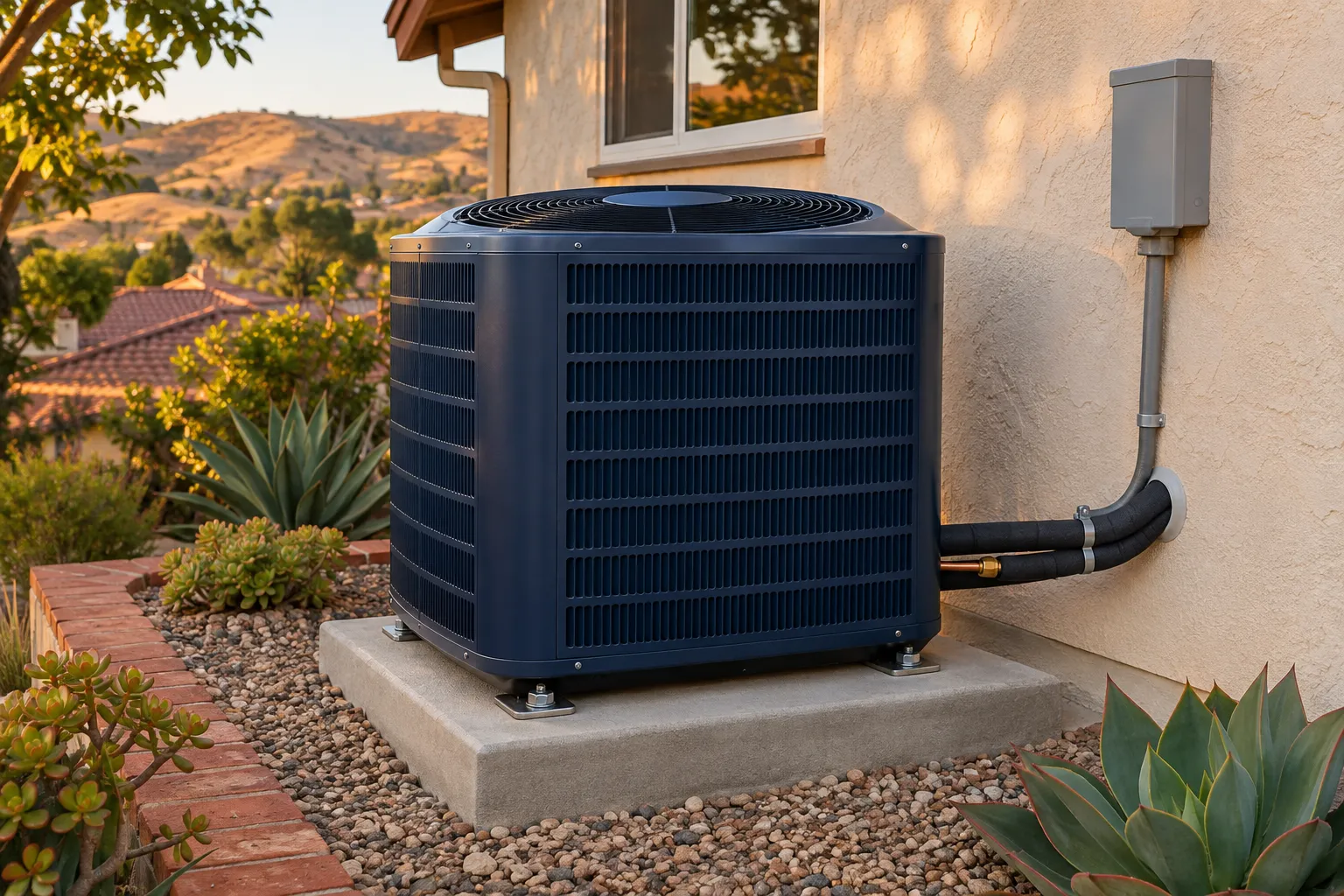
When a furnace or air conditioner has reached the end of the road, the replacement should fit the house rather than simply copy the old unit's size. A properly sized system runs longer, steadier cycles, which tends to mean more even temperatures and less wear than a system that's too big for the space.
It's also the moment to think about the whole system: whether the indoor and outdoor equipment are matched, whether the ductwork can carry the airflow the new equipment needs, and where the thermostat lives.
Questions worth asking about any new system
- How was the size worked out: a load calculation for this house, or the old unit's label?
- Are the indoor coil, furnace or air handler, and outdoor unit a matched set?
- What shape is the existing ductwork in, and will it need repair?
- What do the efficiency ratings (SEER2 for cooling, AFUE for gas furnaces) mean for this house?
- Is a heat pump worth considering instead of a separate furnace and AC?
- What permits does the work need?
Before you replace
- Find the age of the current equipment. It's often coded into the serial number on the unit's data plate.
- Note the rooms that are always too hot or too cold. That's useful information for sizing and ductwork.
- Gather recent utility bills if you have them, to compare against what a new system might use.
- Ask whether the problem you're having is actually fixable first.
Only when it makes sense
The cheapest new system is the one you don't need yet. If a repair will keep your current equipment running well, that conversation should come first.
“The same small crew for decades: we fix what can be fixed, and quote a new system only when it makes sense.”
Other things we work on
Call the Brandts.
Same-day repair calls when booked before noon.
- Mon–Fri
- 7am–5pm
- Sat
- 8am–noon