Most no-heat calls start small
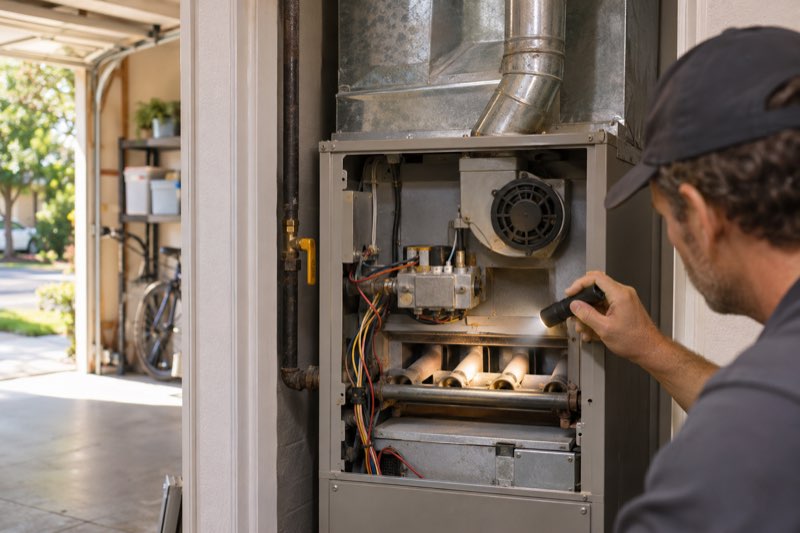
Ignition parts, flame sensors and safety switches fail more often than the big parts. A furnace that will not run is not necessarily a furnace at the end of its life.
Call usMon–Fri 7am–5pm
(555) 010-0162Heating
Inland winter nights get cold, and a furnace that will not light is hard to ignore. Here is what to look for, what is safe to check, and how a repair is priced.
Mon–Fri 7am–5pm
Safety first
If you smell gas, do not touch the furnace, light switches or anything that could spark. Leave the house and call your gas utility or 911 from outside. If a carbon monoxide alarm sounds, get everyone outside and call 911. A home with gas appliances should have working carbon monoxide alarms.
Ignition parts, flame sensors and safety switches fail more often than the big parts. A furnace that will not run is not necessarily a furnace at the end of its life.
A furnace that keeps shutting itself off is often protecting itself from overheating or a venting problem. Resetting it over and over without finding the cause is not a fix.
You should know what is wrong and what it will cost before any work starts, so you can decide whether to repair or look at other options.
How repairs are priced
A flat-rate price for every repair, given before the work starts.
Who quotes the job
A small crew with no commissioned salespeople: the technician who looks at your system is the one who quotes it.
Call and describe what the system is doing. You will have a flat-rate price before any repair starts.