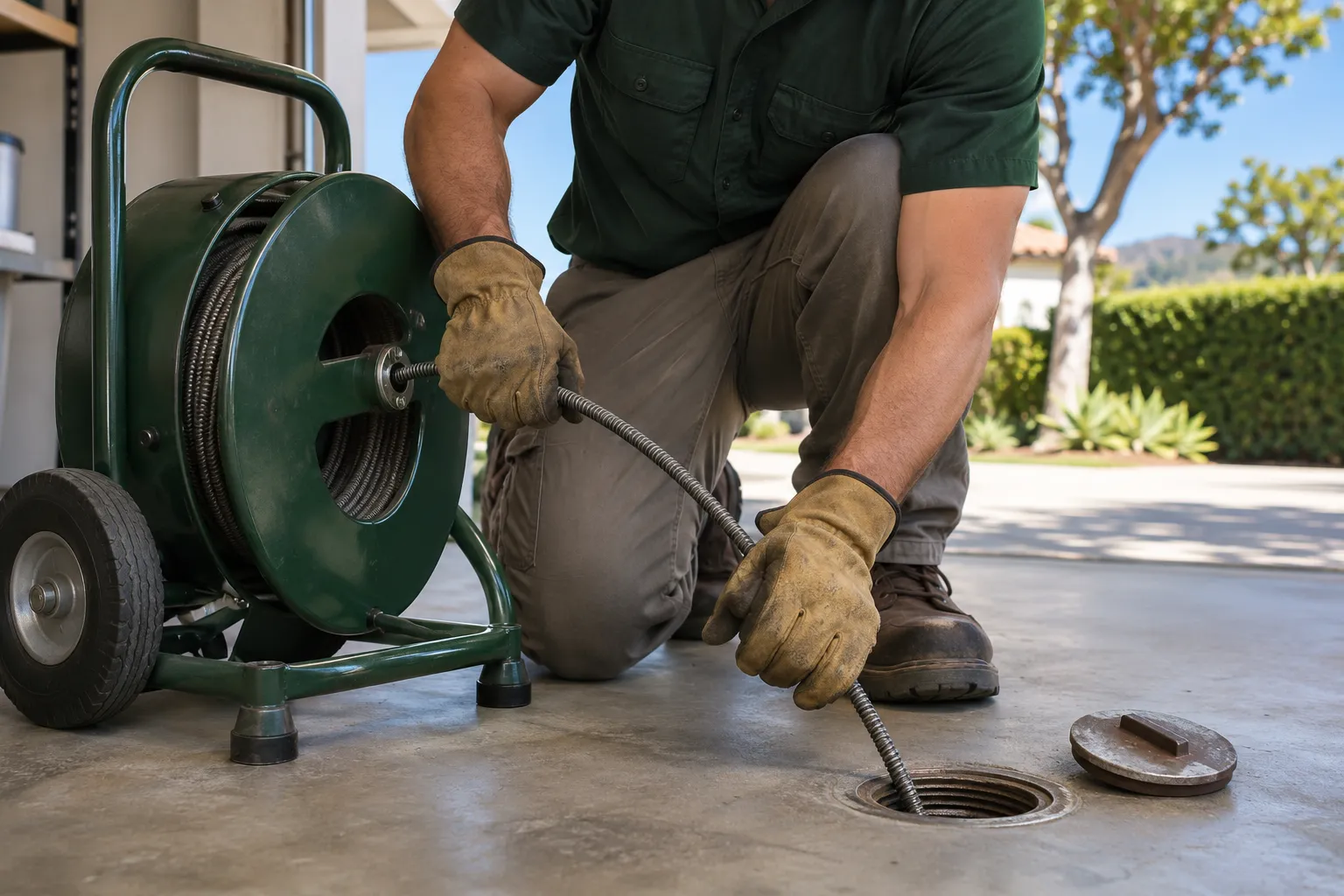
Most clogs build slowly. Kitchen lines collect grease and food scraps, bathroom drains gather hair and soap, laundry lines catch lint. By the time water backs up, the buildup has usually been there a while.
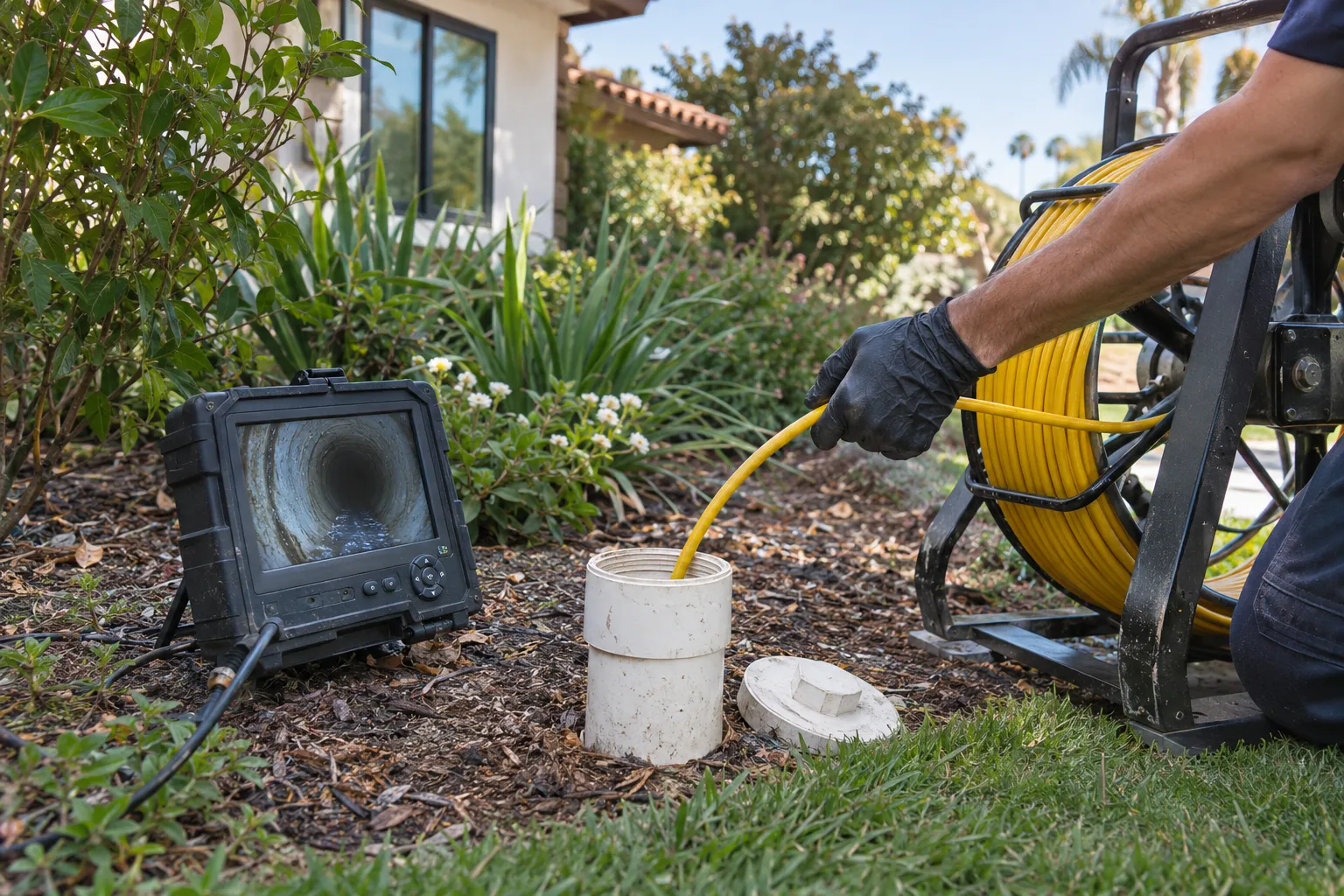
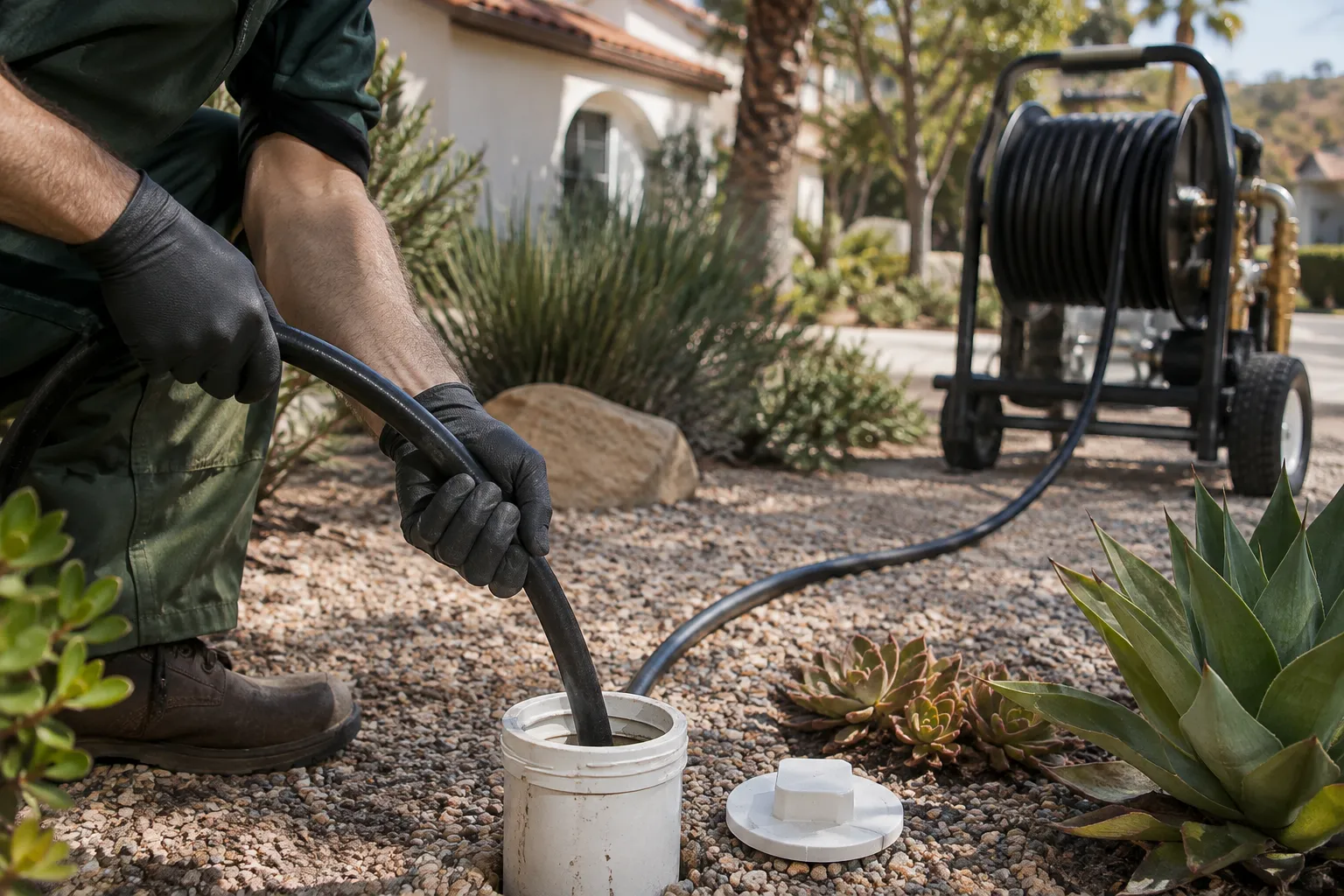
Mechanical drain cleaning runs a cable through the line from the nearest access point to break up the blockage and open the pipe back up, instead of just pushing the problem further along.
Signs a drain needs attention
- Water drains noticeably slower than it used to.
- A sink or tub gurgles when another fixture drains.
- A sour or sewer smell comes up from a drain.
- More than one fixture backs up at once. That usually points to the main line, not a single drain.
How drain cleaning generally goes
Find the access
A trap, a cleanout or the fixture itself, whichever gives the straightest path to the clog.
Clear the line
A cable machine sized to the pipe works through the blockage rather than around it.
Look if it keeps coming back
A clog that returns is telling you something. A camera inspection shows why.
Before you call
Skip the chemical drain openers. They can be hard on older pipes, and they leave caustic water in the line for whoever opens it next.
If several fixtures are backing up, stop running water, the dishwasher and the washing machine until the line is open.