
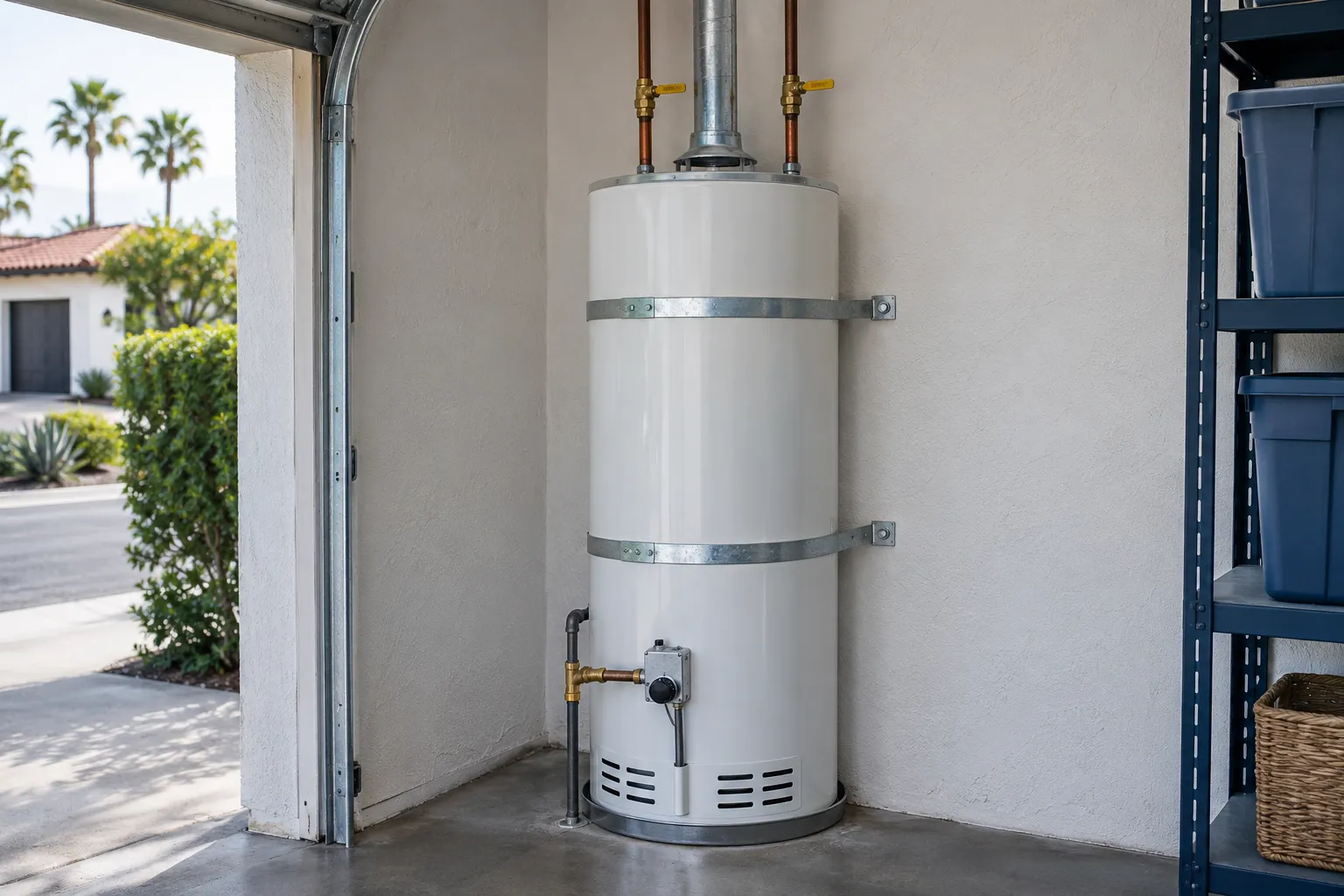
Repair or replace?
Plenty of problems are parts. A thermostat, a heating element, a gas control or thermocouple, a relief valve or a supply connection can often be replaced on its own.
A leak from the tank itself is different. Tanks can't be patched, so a tank that's leaking from the body generally means a new water heater. The age and condition of the unit matter too, and both belong in the decision.
Signs to watch for
- Hot water that runs out sooner than it used to
- Rust-colored water from hot taps only
- Popping, rumbling or banging from the tank
- Water pooling around the base
- A pilot that won't stay lit on a gas unit
Gas and electricity: safety first
If you smell gas, leave the house right away. Don't flip switches, use a phone indoors or light anything. Call your gas utility or 911 from outside.
- Don't try to relight or adjust a gas water heater if you smell gas.
- For an electric heater, switch its breaker off before going near a leak around the unit, and only if you can reach the panel from a dry spot.
- If the tank is leaking, you can close the cold-water shutoff valve on the line feeding it.
- Never cap, plug or remove the temperature and pressure relief valve.